
Seamless & robust content collaboration

Responsibilities
Research
Product Direction
End-to-end Design
Time Frame
4 months
Team
Kate, Product Designer
Susanne, Product Manager
Zoe, Engineering Lead
Salah, Engineer
Ziad, Engineer
Problem: An Outdated, Unhelpful Homepage
LevelTen’s homepage was in need of a refresh. Not only did it no longer reflect how users actually worked but it was built on a legacy version of the platform’s technical infrastructure and keeping it as-is would erode user trust and limit the platform’s ability to scale.

Actionable, insightful content
We knew, based on previous research, and feedback from our customer facing teams that users were coming to the platform for 2 primary reasons:
Check-in on their in progress deals and take action if needed
Seek new opportunities
It was clear that we needed to make those actions clear and easy.
Content variations
The content the user could see on their homepage was specific to them, the active deals they have open, and the status of those deals. Because of that there could be dozens of content variations that a user could see. I created a spreadsheet to track all of the variations which proved to be a useful artifact for product and engineering


I shared early stage thoughts with a cross functional group to get stake holder buy-in and create transparent, ongoing conversations.
Design Exploration
Although it was clear what needed to be on the hoempage I began to explore effective ways of how that information would be communicated. Meeting reguarly with product and engineering counterparts a solution began to take shape.

I frequently share my process with cross functional teammates to get feedback early and often.
Build + Test
Our team was small and scrappy and we didn’t have dedicated testers. I put together a test plan to ensure that all cases and flows were covered and working as expected pre-launch.
Onboarding flows
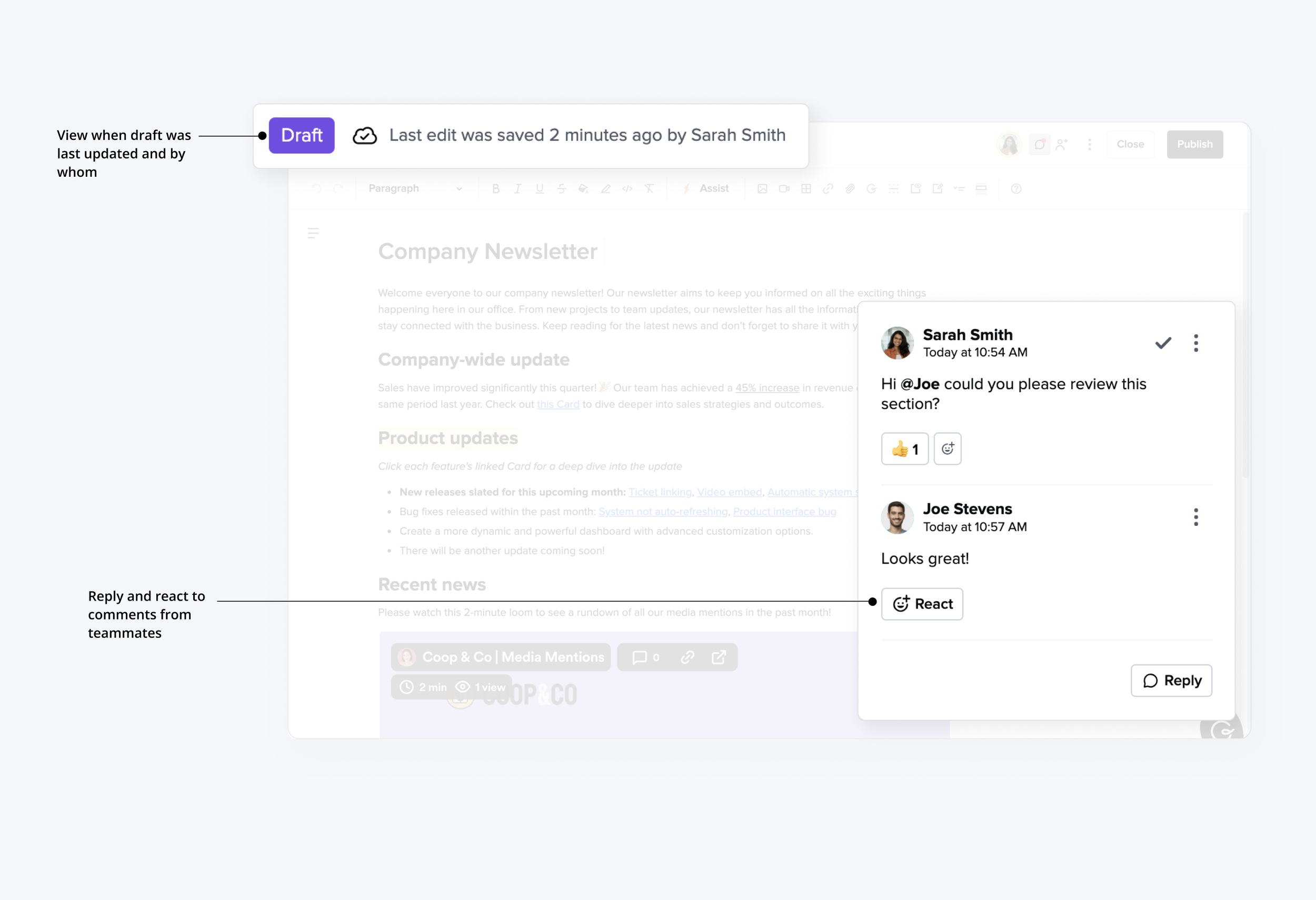
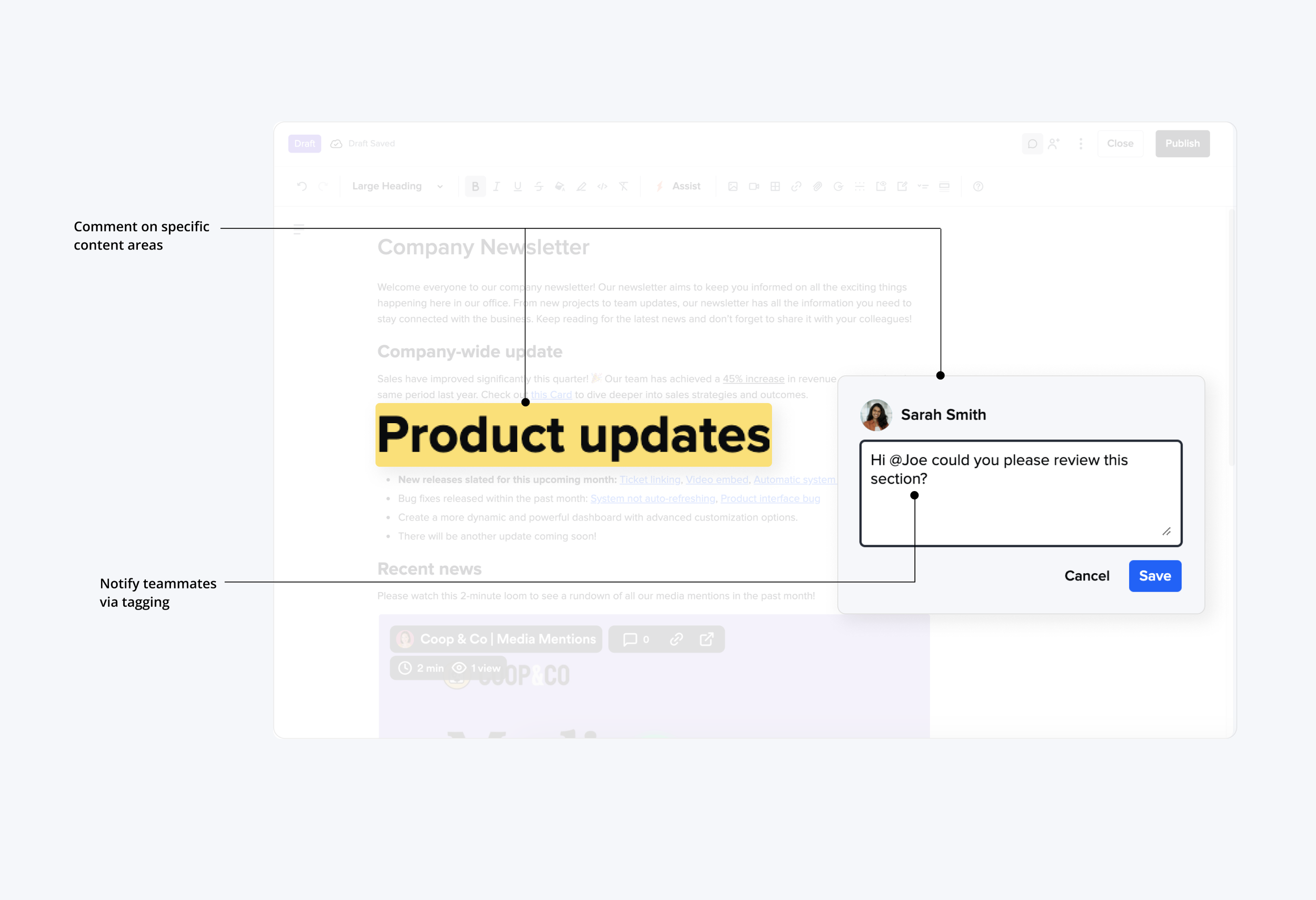
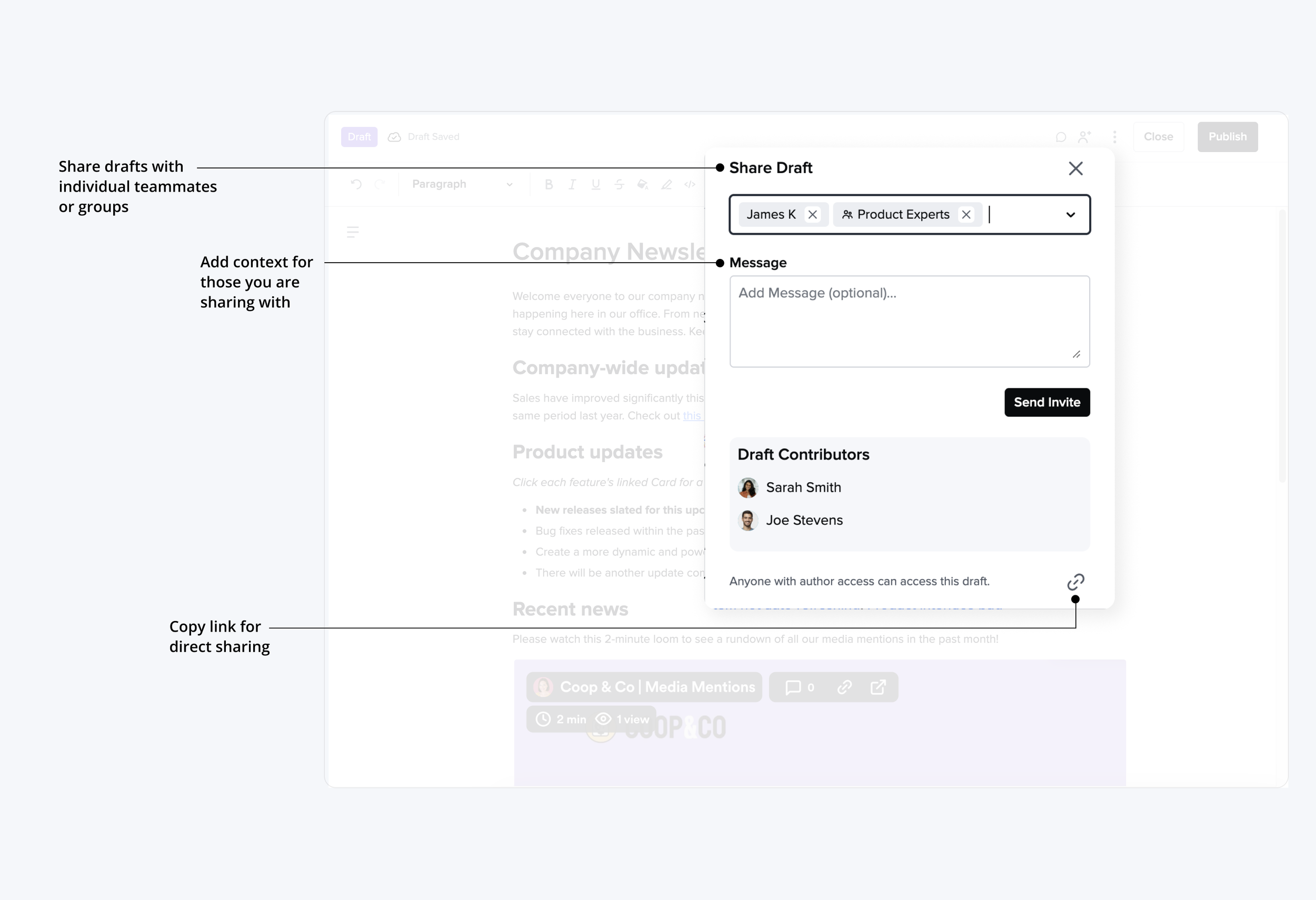
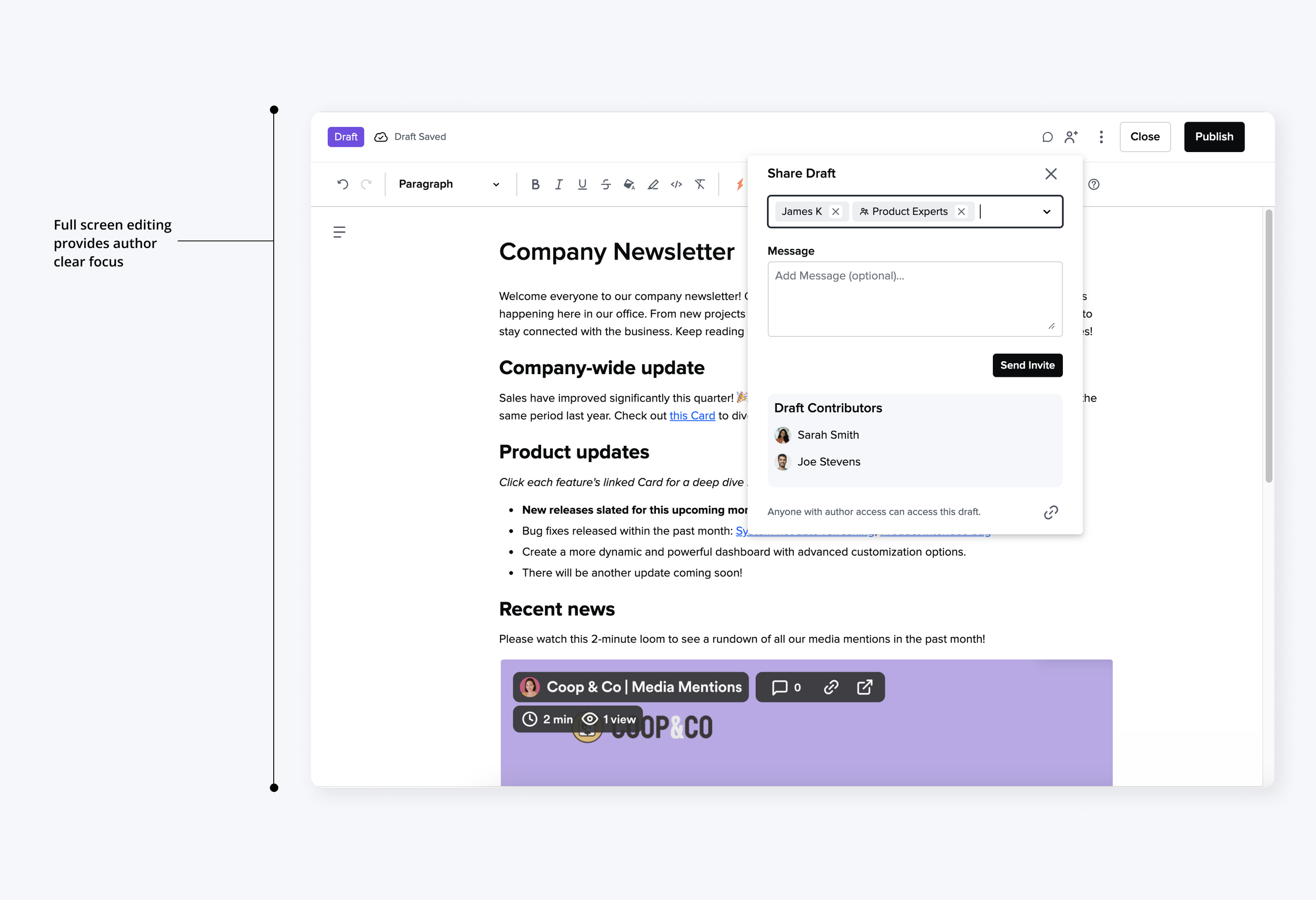
Our product team shipped 4 large, complex feature sets that included Sharing Drafts, Inline Commenting, Collaborative Editing, and Table of Contents.

Notifications integrate with users workflows in Slack…

…or Microsoft Teams, as well as email if that was the user’s preference

Auto created Table of Contents that users can easily opt out of.

Impact
💰
Customer retention and new customer deals
Since the release of these features, customers continue to renew the Guru product for their org. New customers have also signed due, in part, to this project. The combination of these has resulted in over $100k ARR.
😊
Increased user efficiency
Users were no longer forced to use external tools to compensate for lack of collaboration features. This project resulted in increased user efficiency, productivity, and product satisfaction.
What I learned…
🧩
Find the smallest common denominator
When building a feature set and releasing along the way, I needed to be thoughtful in the sequence in which we build so features can be built on top of each other.
🎡
You don’t need to recreate the wheel
There are certain patterns users are familiar with and expect. I learned to be mindful of when to innovate and when to lean into what’s already working.
🔍
Do scrappy research
Even though I didn’t have a chunk of time or a formal project dedicated to research, I was able to collect insights based on information we already had. This was critical in shaping the solution.